
Gut zu wissen, 알아두면 좋은 정보
Prof. Dr. Kabsu Kim: Graphen-Textilien beim Pferd und ihre Bedeutung für die Thermoregulation
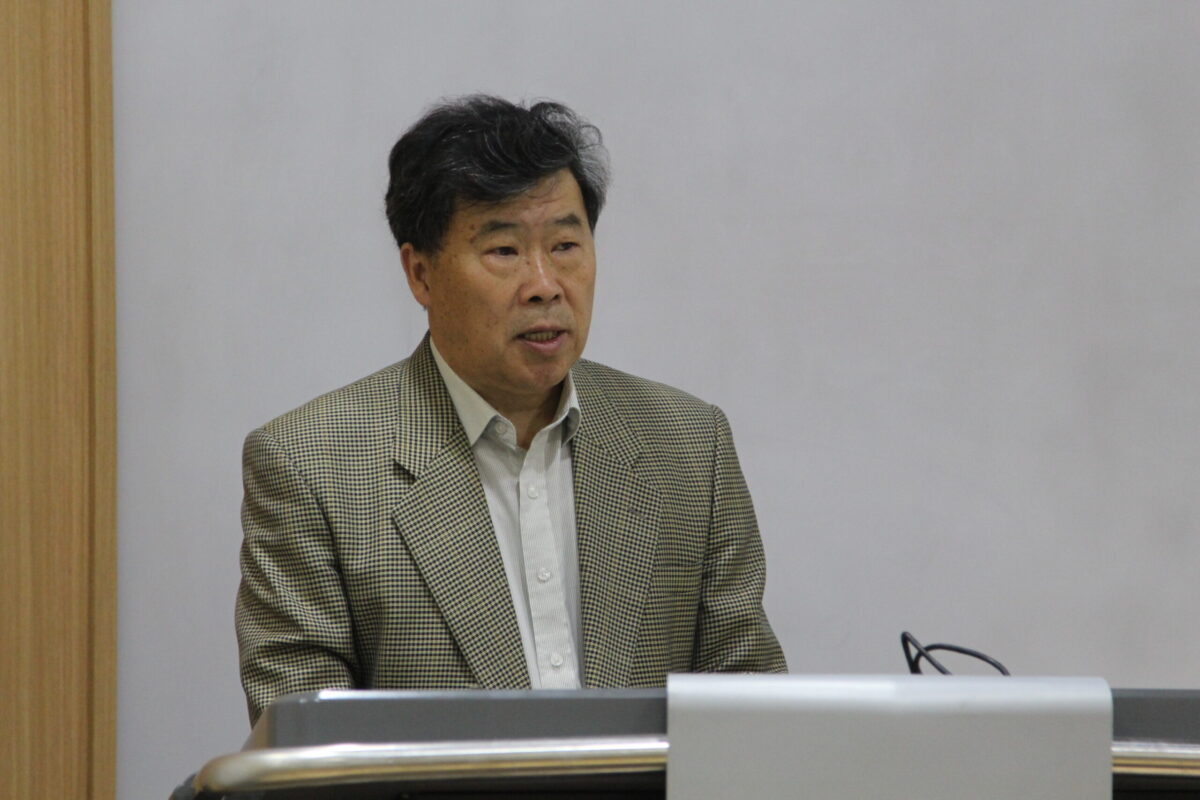
Aug.
Klinische Eigenschaften von Graphenfasern
Prof. Dr. Kabsu Kim
The Global Equine Industry Ecology Institute by Graphenetex
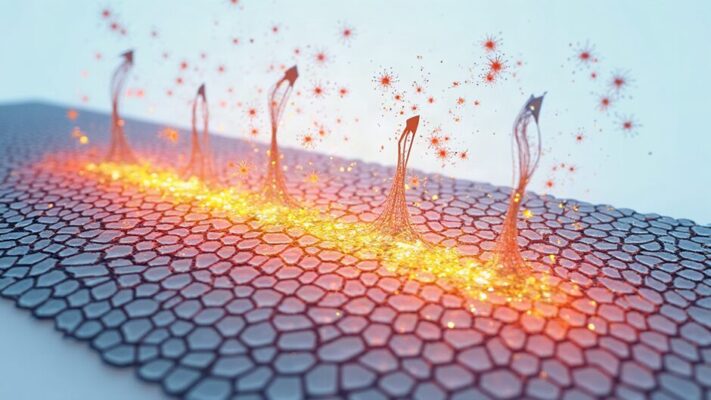
Graphenfasern verbinden die besonderen physikalisch-chemischen Eigenschaften von Graphen mit den strukturellen Eigenschaften von Textilien und können dadurch eine Vielzahl funktioneller Eigenschaften aufweisen. Graphen besteht aus einem zweidimensionalen, hexagonalen Gitter, das durch starke Kohlenstoff-Kohlenstoff-Bindungen gebildet wird. Da sich Phononen innerhalb dieser Struktur effizient bewegen können, weist Graphen eine ausgezeichnete Wärmeausbreitungsfähigkeit auf. Dadurch kann konzentrierte Wärme von einem bestimmten Bereich der Faser schnell über eine größere Oberfläche verteilt werden, wodurch lokal empfundene Hitze reduziert werden kann.
Graphen enthält außerdem delokalisierte π-Elektronen, die eine relativ freie Bewegung von Elektronen ermöglichen. Diese elektrische Leitfähigkeit erlaubt den Einsatz von Graphenfasern als leitfähige Materialien oder Heizelemente. Wenn elektrischer Strom durch die Faser fließt, entsteht nach dem Prinzip der Joule’schen Erwärmung Wärme, beschrieben durch die Gleichung (P=I^2R). Auf diese Weise kann eine relativ gleichmäßige Erwärmung über eine größere Fläche erreicht werden, anstatt die Wärme auf einen einzelnen Bereich zu konzentrieren. Diese flächige Heizfunktion kann bei Winterbekleidung und Wärmeprodukten eingesetzt werden.
Das von Graphenfasern vermittelte Kälte- beziehungsweise Frischegefühl steht mit der flächigen Ableitung der von der Haut erzeugten Wärme sowie mit der Verteilung von Schweiß und Feuchtigkeit über eine größere Oberfläche in Zusammenhang. Dadurch kann die Verdunstung gefördert und das lokale Wärme- und Feuchtigkeitsgefühl auf der Haut reduziert werden. Die tatsächliche Kühlleistung hängt jedoch nicht nur von den Eigenschaften des Graphens ab, sondern auch von der Atmungsaktivität, Feuchtigkeitsaufnahme, Dicke und Gewebestruktur der Graphenfaser.
Bei der Wärmedämmung wirken die Wärmeleitfähigkeit des Graphens und verschiedene Eigenschaften des fertigen Textilprodukts zusammen. Dazu gehören die im Gewebe eingeschlossenen Luftschichten, die Dicke und Dichte der Fasern, die Wärmeverteilung sowie die Eigenschaften der Infrarotstrahlung. Diese Faktoren beeinflussen gemeinsam die Verringerung des Körperwärmeverlusts und die Speicherung von Wärme. Insbesondere eine zusätzliche elektrisch betriebene Heizfunktion kann dazu beitragen, den Wärmekomfort im Winter zu verbessern.
Graphenfasern können außerdem antibakterielle und geruchsmindernde Eigenschaften aufweisen. Die antibakterielle Wirkung wird unter anderem durch Mechanismen erklärt, bei denen Graphen oder graphenbasierte Nanoblätter bei direktem Kontakt die Zellmembranen von Bakterien physisch schädigen, oxidativen Stress auslösen oder die Anhaftung und Vermehrung von Bakterien hemmen. Diese antibakteriellen Wirkungen können dazu beitragen, das Wachstum von Mikroorganismen zu reduzieren, die mit Schweißgeruch in Verbindung stehen. Darüber hinaus können die große spezifische Oberfläche und die Oberflächeneigenschaften graphenbasierter Materialien die Adsorption oder Verteilung von Geruchsmolekülen ermöglichen und dadurch eine geruchsmindernde Wirkung hervorrufen. Die antibakterielle und geruchsmindernde Leistung kann jedoch je nach Graphenart und -konzentration, dem Grad der Oberflächenexposition, der Feuchtigkeitsaufnahme und Schnelltrocknung der Faser sowie den Waschbedingungen unterschiedlich ausfallen.
Die UV-schützenden Eigenschaften von Graphen beruhen auf seiner Fähigkeit, ultraviolette Strahlung zu absorbieren und zu streuen. Wenn Graphen gleichmäßig im Textil verteilt ist, kann es dazu beitragen, die durch das Gewebe hindurchtretende UVA- und UVB-Strahlung zu reduzieren. Die UV-Schutzleistung wird nicht nur durch die Graphenkonzentration und die Beschichtungsdicke beeinflusst, sondern auch durch die Gewebedichte, die Farbe und die Porenstruktur des Textils. Daher sollte diese Leistung durch anerkannte Prüfverfahren, beispielsweise eine UPF-Prüfung, nachgewiesen werden.
Die Haltbarkeit wird durch die chemische Stabilität des Graphens sowie durch die Bindungsfestigkeit zwischen Graphen und Faser bestimmt. Bei Graphenetex®-Fasern ist das Graphen gleichmäßig im Inneren der Faser verteilt und fest mit der Faser verbunden. Dadurch können die funktionellen Eigenschaften auch nach dem Waschen und nach Reibung über einen vergleichsweise langen Zeitraum erhalten bleiben. Wenn Graphen dagegen nur schwach an der Faseroberfläche haftet oder ungleichmäßig verteilt ist, kann sich die Leistung während des Waschens und der Nutzung verschlechtern.
Schließlich können Graphenfasern aufgrund ihres leitfähigen Netzwerks elektromagnetische Wellen abschirmen, indem sie elektromagnetische Strahlung reflektieren oder absorbieren. Die elektromagnetische Abschirmleistung hängt vom Graphengehalt, der Netzwerkstruktur, der Textildicke, dem Frequenzbereich und dem Herstellungsverfahren des Textils ab. Die elektromagnetische Abschirmung sollte daher nicht als eine für alle Graphenfasern gleichermaßen geltende Eigenschaft verstanden werden, sondern als eine Funktion, die unter bestimmten Bedingungen durch Prüfungen nachgewiesen werden muss.
Zusammenfassend lässt sich sagen, dass Graphenetex®-Graphenfasern durch die weltweit einzigartige homogene Verteilung von nanostrukturiertem Graphen eine Vielzahl funktioneller Eigenschaften bieten können. Dazu zählen Wärmeausbreitungsfähigkeit, elektrische Leitfähigkeit, Heizfunktion, Frische- beziehungsweise Kälteempfinden, Wärmedämmung, antibakterielle und geruchsmindernde Eigenschaften, UV-Schutz, Haltbarkeit sowie elektromagnetische Abschirmung. In welchem Umfang diese Eigenschaften bei den tatsächlichen Produkten zum Tragen kommen, hängt von der Graphenart und -konzentration, dem Dispersionszustand, der Art der Verbindung mit der Faser, der Textilstruktur und dem Herstellungsverfahren ab. Daher sollten die Produkteigenschaften stets zusammen mit unternehmens- und produktspezifischen Prüfberichten sowie anerkannten Zertifizierungsunterlagen bewertet werden.
Praktische Anwendung: Die beschriebenen Eigenschaften von Graphen-Textilien werden bei Quittpad unter anderem in der Quittpad® Graphene Fliegendecke eingesetzt.
Prof. Dr. Kabsu Kim
The Global Equine Industry Ecology Institute by Graphenetex
Über den Autor: Prof. Dr. Kabsu Kim
Clinical Properties of Graphene Fibers
Prof. Dr. Kabsu Kim
The Global Equine Industry Ecology Institute by Graphenetex
Graphene fibers combine the unique physicochemical properties of graphene with the structural characteristics of textiles, enabling them to exhibit a variety of functional properties. Graphene consists of a two-dimensional hexagonal lattice formed by strong carbon–carbon bonds. Because phonons can move efficiently through this structure, graphene demonstrates excellent thermal diffusivity. Accordingly, it may help rapidly distribute concentrated heat from one area of a fiber across a wider surface, thereby reducing localized sensations of heat.
Graphene also contains delocalized π electrons, which allow electrons to move relatively freely. This electrical conductivity enables graphene fibers to be used as conductive materials or heating circuits. When an electric current passes through the fiber, heat is generated according to the Joule heating principle, expressed as (P=I^2R). This principle can be used to produce relatively uniform heating over a broad surface rather than concentrating heat in a specific area. Such planar heating characteristics may be applied to winter clothing and thermal products.
The cooling sensation provided by graphene fibers is associated with the in-plane dissipation of heat generated by the skin, as well as the spreading of sweat and moisture over a wider area, which can promote evaporation. As a result, graphene fibers may help reduce localized sensations of heat and dampness on the skin. However, actual cooling performance is influenced not only by the properties of graphene but also by the breathability, moisture absorption, thickness, and textile structure of the graphene fiber.
In terms of thermal insulation, graphene’s thermal conductivity interacts with several characteristics of the finished product, including the air layers formed within the fabric, fiber thickness and density, heat distribution, and infrared radiation properties. These factors collectively affect the reduction of body-heat loss and the retention of warmth. In particular, the addition of an electrically powered heating function may help improve thermal comfort during winter.
Graphene fibers may also exhibit antibacterial and deodorizing properties. Antibacterial activity is associated with mechanisms such as the physical damage of bacterial cell membranes through contact with graphene or graphene-based nanosheets, the induction of oxidative stress, and the inhibition of bacterial adhesion and proliferation. These antibacterial effects may help reduce the growth of microorganisms that contribute to perspiration-related odors. In addition, the large surface area and surface properties of graphene-based materials may enable the adsorption or dispersion of odor molecules, resulting in a deodorizing effect. However, antibacterial and deodorizing performance may vary depending on the type and concentration of graphene, the degree of surface exposure, the moisture absorption and quick-drying properties of the fiber, and washing conditions.
The UV-protective properties of graphene result from its ability to absorb and scatter ultraviolet radiation. When graphene is uniformly dispersed throughout a textile, it may help reduce the amount of UVA and UVB radiation transmitted through the fabric. UV-blocking performance is influenced not only by graphene concentration and coating thickness but also by fabric density, color, and pore structure. Therefore, this performance should be verified through recognized testing, such as UPF testing.
Durability is determined by the chemical stability of graphene and the bonding strength between graphene and the fiber. In Graphenetex® fibers, the graphene is uniformly dispersed throughout the fiber and strongly bonded to it; therefore, the functional properties may be maintained for a relatively long period even after washing and friction. Conversely, if graphene is weakly attached to the fiber surface or is unevenly dispersed, performance may deteriorate during washing and use.
Finally, graphene fibers may provide electromagnetic-wave shielding by reflecting or absorbing electromagnetic radiation through a conductive network. Electromagnetic shielding performance depends on the graphene content, network structure, fabric thickness, frequency range, and textile manufacturing method. Accordingly, electromagnetic shielding should not be regarded as an identical property of all graphene fibers, but rather as a function that must be verified through testing under specific conditions.
In conclusion, Graphenetex® graphene fibers, through the homogeneous dispersion of globally unique nano-sized graphene, may provide a wide range of functional properties, including thermal diffusivity, electrical conductivity, heating capability, cooling sensation, thermal insulation, antibacterial and deodorizing properties, UV protection, durability, and electromagnetic-wave shielding. The extent to which these properties are expressed in actual products depends on the type and concentration of graphene, its dispersion state, the method of bonding with the fiber, the textile structure, and the manufacturing process. Therefore, product performance should always be evaluated together with company-specific and product-specific test reports and recognized certification documents.
Prof. Dr. Kabsu Kim
The Global Equine Industry Ecology Institute by Graphenetex
About the Author: Prof. Dr. Kabsu Kim
그래핀섬유의 임상적 특성
Prof. Dr. Kabsu Kim, The Global Equine Industry Ecology Institute by Graphenetex
그래핀 섬유는 그래핀의 독특한 물리·화학적 특성과 섬유 구조가 결합하여 다양한 기능성을 나타낼 수 있다. 먼저 그래핀은 강한 탄소–탄소 결합으로 이루어진 2차원 육각형 격자 구조를 가지며, 이 구조에서 포논이 효율적으로 이동하기 때문에 우수한 열 확산성을 나타낸다. 따라서 섬유의 한 부분에 집중된 열을 넓은 면적으로 빠르게 분산시켜 국부적인 열감을 줄이는 데 도움을 줄 수 있다.
또한 그래핀 내부에는 비편재화된 π 전자가 존재하여 전자가 비교적 자유롭게 이동할 수 있다. 이러한 전기전도성은 그래핀 섬유를 전도성 소재나 발열 회로로 활용할 수 있게 한다. 섬유에 전류가 흐르면 줄열, 즉 (P=I^2R)의 원리에 따라 열이 발생하며, 이를 이용하면 특정 부위가 아닌 넓은 면적에서 비교적 균일한 발열을 구현할 수 있다. 이러한 면상 발열 특성은 겨울철 의류나 온열 제품에 활용될 수 있다.
그래핀 섬유의 냉감성은 피부에서 발생한 열을 섬유의 면 방향으로 확산시키고, 땀이나 수분을 넓게 퍼뜨려 증발을 촉진하는 원리와 관련이 있다. 이로 인해 피부의 국부적인 열감과 습윤감을 줄이는 데 도움을 줄 수 있다. 다만 실제 냉감 성능은 그래핀의 특성뿐 아니라 그래핀섬유의 통기성, 흡습성, 두께 및 직물 구조에 의해서도 크게 좌우된다.
보온성의 경우 그래핀 자체의 열전도성과 실제 제품에서 직물 내부에 형성된 공기층, 섬유의 두께와 밀도, 열의 분산, 적외선 복사 특성 등이 복합적으로 작용하여 체온 손실을 줄이고 온기를 유지하는 데 영향을 미친다. 특히 전기 발열 기능이 더해지면 겨울철 보온 성능을 향상시키는 데 도움이 될 수 있다.
그래핀 섬유는 항균 및 소취 기능도 나타낼 수 있다. 항균성은 그래핀 또는 그래핀계 나노시트가 세균의 세포막과 접촉하여 물리적으로 손상시키거나, 산화 스트레스를 유발하고, 세균의 부착과 증식을 억제하는 작용과 관련이 있다. 이러한 항균 작용은 땀 냄새를 유발하는 세균의 증식을 줄이는 데 도움을 줄 수 있다. 또한 그래핀계 소재의 넓은 표면적과 표면 특성에 의해 냄새 분자가 흡착되거나 분산되어 소취 효과가 나타난다. 그러나 항균성과 소취성은 그래핀의 종류와 함량, 표면 노출 정도, 섬유의 흡습·속건성 및 세탁 조건에 따라 달라질 수 있다.
자외선 차단성은 그래핀이 자외선을 흡수하거나 산란시키는 특성에서 비롯된다. 그래핀이 섬유에 균일하게 분산되면 직물을 통과하는 UVA와 UVB의 양을 줄이는 데 기여할 수 있다. UV 차단 성능은 그래핀의 농도와 코팅 두께뿐 아니라 직물의 조직 밀도, 색상 및 공극 구조에도 영향을 받으며 UPF와 같은 공인 시험 결과를 통해 확인하고 있다.
내구성은 그래핀의 화학적 안정성과 그래핀과 섬유 사이의 결합력에 의해 결정된다. 그래핀텍스(graphenetex®)의 그래핀이 섬유 내부에 균일하게 분산되고 섬유와 강하게 결합되어 있어 세탁이나 마찰 이후에도 기능이 상당히 오래 유지될 수 있다. 반대로 그래핀이 섬유 표면에 약하게 부착되어 있거나 분산 상태가 불균일하면 세탁과 사용 과정에서 성능이 저하될 가능성이 있다.
마지막으로 그래핀 섬유는 전도성 네트워크를 통해 전자기파를 반사하거나 흡수함으로써 전자파 차폐 기능을 나타낼 수 있다. 전자파 차폐 성능은 그래핀의 함량과 네트워크 구조, 섬유의 두께, 주파수 범위 및 직물의 제작 방식에 따라 달라진다. 따라서 그래핀 섬유의 전자파 차폐성은 모든 제품에 동일하게 적용되는 특성이 아니라, 특정 조건에서 시험을 통해 확인되는 기능으로 이해해야 한다.
종합하면, Graphenetex®의 그래핀 섬유는 전세계에서 유일하게 나노화된 그래핀의 균질한 분산으로 열 확산성, 전기전도성, 발열성, 냉감성, 보온성, 항균·소취성, UV 차단성, 내구성 및 전자파 차폐성 등 다양한 기능을 기대할 수 있는 소재이다. 이러한 기능이 실제 제품에서 어느 정도 발휘되는지는 그래핀의 종류와 함량, 분산 상태, 섬유와의 결합 방식, 직물 구조 및 제조 공정에 따라 달라지므로, 구체적인 성능을 판단할 때는 반드시 회사별 제품별 시험 성적서와 공인 인증 자료를 함께 확인해야 한다. Prof. Dr. Kabsu Kim, The Global Equine Industry Ecology Institute bei Graphnetex
저자 소개: Prof. Dr. Kabsu Kim
Über den Autor: Prof. Dr. Kabsu Kim
Prof. Dr. Kabsu Kim
International Academic Curriculum Vitae
Personal Information
Name: Prof. Dr. Kabsu Kim
Nationality: Republic of Korea
Current Position: Director, The Global Equine Industry Ecology Institute by Graphenetex
Academic and Professional Leadership: President, Korean Society for Equine Industry Ecology
President, The Korean Horse Industry Association
Professional Fields: Equine Science, Veterinary Medicine, Equine Biomechanics, Therapeutic Riding, Veterinary Acupuncture, Equine Rehabilitation, Human–Horse Interaction, Equine Welfare
Academic Profile
Prof. Dr. Kabsu Kim is an internationally experienced veterinarian, equine scientist, educator, and researcher specializing in equine biomechanics, therapeutic riding, veterinary acupuncture, equine rehabilitation, and horse–human interaction. He completed his veterinary education and doctoral training in Germany and has worked extensively across academic, clinical, and industrial sectors in Korea and Europe.
His interdisciplinary work integrates veterinary medicine, rehabilitation science, biomechanics, physiology, acupuncture, equine welfare, and human–horse communication. Over several decades, he has contributed to equine medicine, riding rehabilitation, veterinary acupuncture education, and advanced equine training systems.
Education
Young San Technical High School, Seoul
March 1973 – February 1976
Free University Berlin
Ph.D. in Veterinary Science (Specialist for Surgery)
Berlin, Germany | 1998
Doctoral Dissertation:
Theoretical Foundations of Acupuncture and Clinical Investigation of Acupuncture in Patients with Joint Disorders
(German title: Theoretische Grundlage der Akupunktur – Klinische Untersuchung der Akupunktur von Patientenmaterial mit Gelenkproblemen)
Free University Berlin
College of Veterinary Science
Berlin, Germany | 1985 – 1991
Korea University
Bachelor of Science in Animal Science
College of Agriculture, Seoul, Korea | 1976 – 1983
Academic Appointments
Cheju Halla University
Former Associate Professor, School of Equine Studies
Jeju, Korea | 2012 – 2025
Konkuk University
Professor of Therapeutic Riding and Animal-Assisted Therapy
Graduate School of Agriculture and Livestock, Department of Animal-Assisted Therapy
Seoul, Korea | 2018 – 2022
Major Teaching Areas
- Anatomy and Physiology of Horse
- Equine Biomechanics
- Human–Horse Interaction
- Therapeutic Riding Theory and Practice
- Research Methodology
- Equine Rehabilitation
Additional Teaching Experience
- 1996 ss: Laboratory Animal, Yeonam College
- 1996 ss: Embryo Transfer, Korea University
- 1996 ss: Special Lecture Animal Physiology for Master Students, Korea University
- 1996 ws: Animal Anatomy, Ansung University
- 1996 ss: Animal Diseases, Ansung University
- 1999 ss: Diseases of Milk Cow, Yeonam College
- 1999 ws: Diseases of Milk Cow, Yeonam College
- 1999 ws: Therapeutic Riding, Korea University
- 2000 ws: Horse and Horseback Riding, Milyang National University
- 2001 ss: Horse Science, Milyang National University
- 2001 ss: Reproduction Physiology, Milyang National University
- 2001 ws: Therapeutic Riding, Korea University
- 2001 ws: Horse and Lecture
- 2001 ws: Reproduction Physiology, Milyang University
- 2001 ws: Equine Reproduction Physiology, Milyang University
- 2004 ss: Equine Medicine, Kyungsang National University
- 2005 ss: Equine Medicine, Kyungsang National University
- 2006 ss: Equine Medicine, Kyungsang National University
- 2007 ss: Equine Medicine, Kyungsang National University
Related Lectures at Cheju Halla University
- 1st year: Anatomy and Physiology of Horse (2 Semester)
- 2nd / 3rd year: Therapeutic Riding (Theory and Practice, 2 Semester)
- 3rd year: Biomechanics: Human and Horse Interaction (1 Semester)
- 4th year: Research Methods (1 Semester)
Professional Experience
The Global Equine Industry Ecology Institute by Graphenetex
Director
2025 – Present
Korean Society for Equine Industry Ecology
President
2025 – Present
Dr. Kim’s Equine Clinic
Founder and Equine Veterinary Surgeon
Ansung, Korea | 1995 – 2012
Equine Service Worldwide
Chief Executive Officer (2002–2006)
Chief Technology Officer (2006–2012)
Embiotec
Chief Executive Officer
1996 – 1999
Caprobiotec
Chief Technology Officer
1999 – 2000
Mistle Biotech
Scientific Consultant
2000 – Present
Neurotide Biotech
Scientific Consultant
2001 – 2002
Veterinary Clinics in Berlin and Munich
Veterinary Surgeon
Germany | 1992 – 1995
Arche Noah Service Gesellschaft, Germany
December 1994 – 1996
Zoo Berlin
Veterinary Volunteer
Germany | 1989 – Present
International and Professional Activities
Fédération Équestre Internationale (FEI)
International Veterinary Surgeon
1998 – Present
Korean Equestrian Federation
Veterinary Committee Member
1997 – Present
International Show Jumping Judge
1997 – Present
German Veterinary Association (ATF)
Lecturer in Veterinary Acupuncture
1991 – Present
Free University Berlin
Lecturer in Veterinary Acupuncture
1988 – 1992
Research Interests
- Equine Biomechanics
- Human–Horse Interaction
- Therapeutic Riding and Rehabilitation
- Veterinary Acupuncture
- Equine Neurophysiology
- Equine Welfare Science
- Equine Hoof Anatomy and Pathology
- Equine Rehabilitation Technologies
- High-Speed Treadmill Training Systems
- Joint Immunology
- Bio-integrated Monitoring Systems for Horses
- Equine Stress and Balance Analysis
Academic Leadership and Memberships
President
Korean Horse Research Council
1998 – Present
Board Member
Korean Society of Animal Resource Science
2003 – Present
Board Member / Chairman of Academic Committee
Korean Horse Industry Society, President
2026 – Present
Member
Gesellschaft für Pferdemedizin e.V., Germany
1992 – Present
Member
Gesellschaft für Ganzheitliche Tiermedizin e.V., Germany
1991 – 1996
Member
International Institute of Refrigeration (IIR) – Korean Committee
1998 – Present
International Workshops and Conferences
International Workshop for Clinical Veterinary Acupuncture
Founder and Organizer
Ansung, Korea | 1999, 2001
Every 2 Years to be held in Jeju Island, Korea
Electroacupuncture Analgesia Seminar
College of Veterinary Medicine, Free University Berlin
Berlin, Germany | 1993
Annual Seminar for Practical Veterinary Surgeons
4 times pro Year | Germany | 1992 – 1995
Selected Research Projects
Development of Lameness Diagnostic Systems Using Digital Sonography
1999 – 2002
High-Speed Treadmill Rehabilitation Programs for Horses and Disabled Riders
1998 – 2003
Practical Embryo Transfer Systems in Korean Native Cattle
1996
Development of Calf Production Models Using In Vitro Technologies
1996 – 1999
PCR-Based Sex Determination and Embryo Manipulation Research
1996 – 1998
Additional Details on Academic Performance
May 1996 – April 1998: Thesis
Translation: Pre Sex-determination with PCR and Practical Embryo Transfer of the manipulated Embryos
August 1996 – July 1999: Thesis
Translation: Development of Calves Production Model by In Vitro Techniques
January 1996 – December 1996
Translation: Practical embryo transfer by Korean Native Cattle
October 1999 – April 2002: Thesis
Translation: Development of new Lameness Diagnostic Method by Digital Sonography
June 1998 – May 2003: Thesis
Translation: Design of Training Programs for Young Horse and the disabled in views of Rehabilitation in use of High Speed Treadmill under electrocardiogram control
Selected Publications
Equine Science and Rehabilitation
- Kim, K. (2006). Therapeutic effects of horseback riding for the disabled.
- Kim, K. (2003). Anatomy and histological structures of equine hoof and economic losses associated with pathological hoof changes.
- Bae, J. H., Kim, K., Yoo, Y. C., Lee, H. Y., & Lee, K. B. (2001). Investigation of synovial fluid and serum biochemical markers of equine joint diseases. Journal of Veterinary Clinics, 18(3), 304–310.
- Budras, K.-D., Scheibe, K., Patan, B., Streich, W. J., & Kim, K. (2001). Laminitis in Przewalski horses kept in a semireserve. Journal of Veterinary Science, Vol. 2, No. 1, April 2001.
- Kabsu Kim, K.-D. Budras, Ch. Schiel (1999). The horn quality of the white line in the domestic horse (Equus caballus), compared with the Przewalskii’s horse (Equus Przewalskii). Proceedings of the Annual Meeting of Korean Horse Research.
- Kim, K. S., Han, S. S., Kim, C. H. Effects of improving the physiological performance of the racing horse with High Speed Treadmill.
High Speed Treadmill (Equfit plus)을 이용한 고능력 마필의 운동효과
Proceedings of the Autumn Annual Meeting of Korean Horse Research. - Kim, K. S.
말 (馬)의 현대적 응용범위 – 정신질환자의 치료승마 및 장애인 승마(乘馬) –
Translation: The modern Use of Horse as Riding for the psychological Disabled.
Proceedings of the Spring Annual Meeting of Korean Horse Research. - Kim, K. S. (1999). Developmental History of Horse in Korean Peninsula. Proceedings of the Spring Annual Meeting of Korean Horse Research.
- Kim, K. S., Lee, S. J., Park, Y. D. (1998). Improvement of the immune status through immune stimulator – Study on developing the immune status and improving the stamina against endogenic and exogenic factors. Proceedings of International Seminar between Korea and Germany with Exhibition, “Trends in Marine Biotechnology”, May 6, 1998.
- Kim, K. S., Lee, S. J., Kim, C. H. Etiology and developing mechanism of edema in joint and tendon of horse legs and effective therapy in use of Equidrain. Journal of the Korean Veterinary Medical Association.
Veterinary Acupuncture
- Kim, K. S. (1997). Acupuncture in practical veterinary medicine. Journal of the Korean Veterinary Medical Association.
- Wollgien, D., & Kim, K. (1996). Praxiserfahrungen mit der Akupunktur bei der Bewegungsstörungen des Hundes.
Translation: Clinical case study on veterinary acupuncture by joint disease of dogs.
Der Praktische Tierarzt, April 1996, 78: 314–318. - K. Kim, D.-S. Suh (1994). Untersuchung zur lokalen Akupunkturanalgesie bei Rindern durch elektrische Stimulation.
Investigation on influence of electric stimulation to local analgesia by cow;
전기자극을 이용한 소의 국부마취효과
Zeitschrift für Ganzheitliche Tiermedizin (ZGT), Heft 2, 1994.
Biotechnology and Reproductive Physiology
- Yoon, T. J., Yoo, Y. C., Kang, T. B., Her, E., Kim, S.-H., Kim, K., & Azuma, I. (2001). Cellular and humoral adjuvant activity of lectins isolated from Korean mistletoe (Viscum album coloratum). International Immunopharmacology, Vol. 1, Issue 5, pp. 881–889, 2001.
- T. J. Yoon, T. B. Kang, S.-H. Kim, K. S. Kim and J. B. Kim (2001). Production of Monoclonal Antibodies Specific to Korean Mistletoe Lectin (KML-C) and Their Characterization. Yahak Hoeji, Vol. 45, No. 2.
- Yung Choon Yoo, Bong Ho Lee, Sang Tae Kwak, Kabsu Kim, Won Bo Sim and Kyung Bok Lee (2001). Regulatory Effect of Chondroitin Sulfates Derived from Human Placenta on Mitogen-Induced Activation of Murine Splenocytes. The Korean J. Lab. Anim. Sci. 17(1), March 2001, pp. 59–64.
- Kim, K. S., Kim, C. H. (1999).
セレニウム投與がアルコ一ル處理ラツトの血漿と精巢の抗酸化酵素系におよぼす影響
Effects of selenium supplementation on the antioxidative enzymes activity of blood plasma and testis in alcohol-exposed rats.
16th Symposium on Trace Nutrients, May 25, 1999, Kyoto. - K. D. Seo, H. J. Kim, K. S. Kim, and K. S. Kim (1998). Effects of ITS or EGF on Blastocyst Development of In Vitro Matured, Fertilized Bovine Oocytes. The 8th World Conference on Animal Production (WCAP), June 28–July 4, 1998, Seoul, Korea (PR2-1).
- Kim, K. S., Lee, S. J., Klocke, P., von Fehrn, S. (1998). Study on estrus synchronisation in non-breeding season and on practical embryo transfer in goats. The 8th World Conference on Animal Production (WCAP), June 28–July 4, 1998, Seoul, Korea (PR3-8).
- Seo, K. D., Kim, H. J., Kim, K. S., Kim, K. S. Development of Production Techniques for Korean Native Cattle Calves from Embryos by In Vitro Technology – II. Effects of ITS and EGF on Blastocyst Development of In Vitro Matured, Fertilized Bovine Oocytes. Korean J. Animal Reprod.
- K. S. Kim, S. J. Lee, Y. J. Yang, Y. S. Kim (1997). Practical approaching to bovine embryo transfer. Journal of Cattle Improvement, 103–109.
- K. D. Seo, H. J. Kim, K. S. Kim, K. S. Kim. Development of Production Techniques for Korean Native Cattle Calves from Embryos by In Vitro Technology – III. Effects of Culture Medium on Blastocyst Development and Effects of Sucrose and Trehalose on the Survival Rate of In Vitro Developed Embryos after Thawing. Korean J. Emb. Trans. (1998), Vol. 13, No. 2, pp. 173–178.
- Seo SeungWon, Lee HongJun, Kim KiDong, Kim KabSu and Lee SangHo (1997). Sex predetermination and in vitro development of bovine embryos following micromanipulation. Proc. Mol. Biol. & Genet., Vol. 12, pp. 623–624, October 1997.
Books and Educational Publications
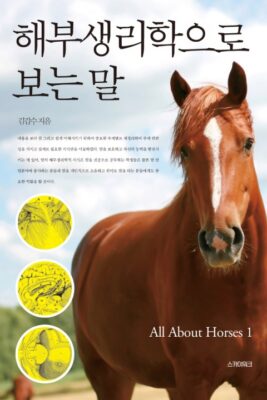

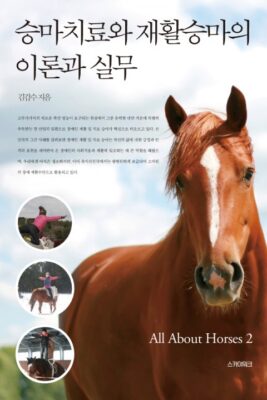

Author
- Anatomy and Physiology of Horse (2015, published and Ebook)
- Therapeutic Riding: Theory and Practice (2016, published and Ebook)
- The Welfare of Horse (2016, published and Ebook)
- The Sitting School on Horse (2016, Ebook)
Translator
- Introduction to Veterinary Anatomy and Physiology Textbook – Victoria Aspinall, Melanie Cappello (2014)
- Introduction to Veterinary Anatomy and Physiology Workbook – Sally Bowden (2014)
Books in Preparation
- The Hoof
- The Acupuncture Therapy and Herbal Medicine of Horse
- Irish Jumping School
- Developmental Biology Horse Brain
Core Competencies
- Equine Veterinary Medicine
- Equine Rehabilitation Systems
- Therapeutic Riding Programs
- Veterinary Acupuncture
- Equine Biomechanics
- Human–Horse Communication
- Equine Welfare
- Veterinary Education
- International Academic Collaboration
- Equine Performance Analysis
- Equine Rehabilitation Technology Development
- Multidisciplinary Biomedical Research
Languages
- Korean (Native)
- English (Professional)
- German (Professional)
References
Available upon request.